
Should You Paint or Replace Your Kitchen Cabinets?
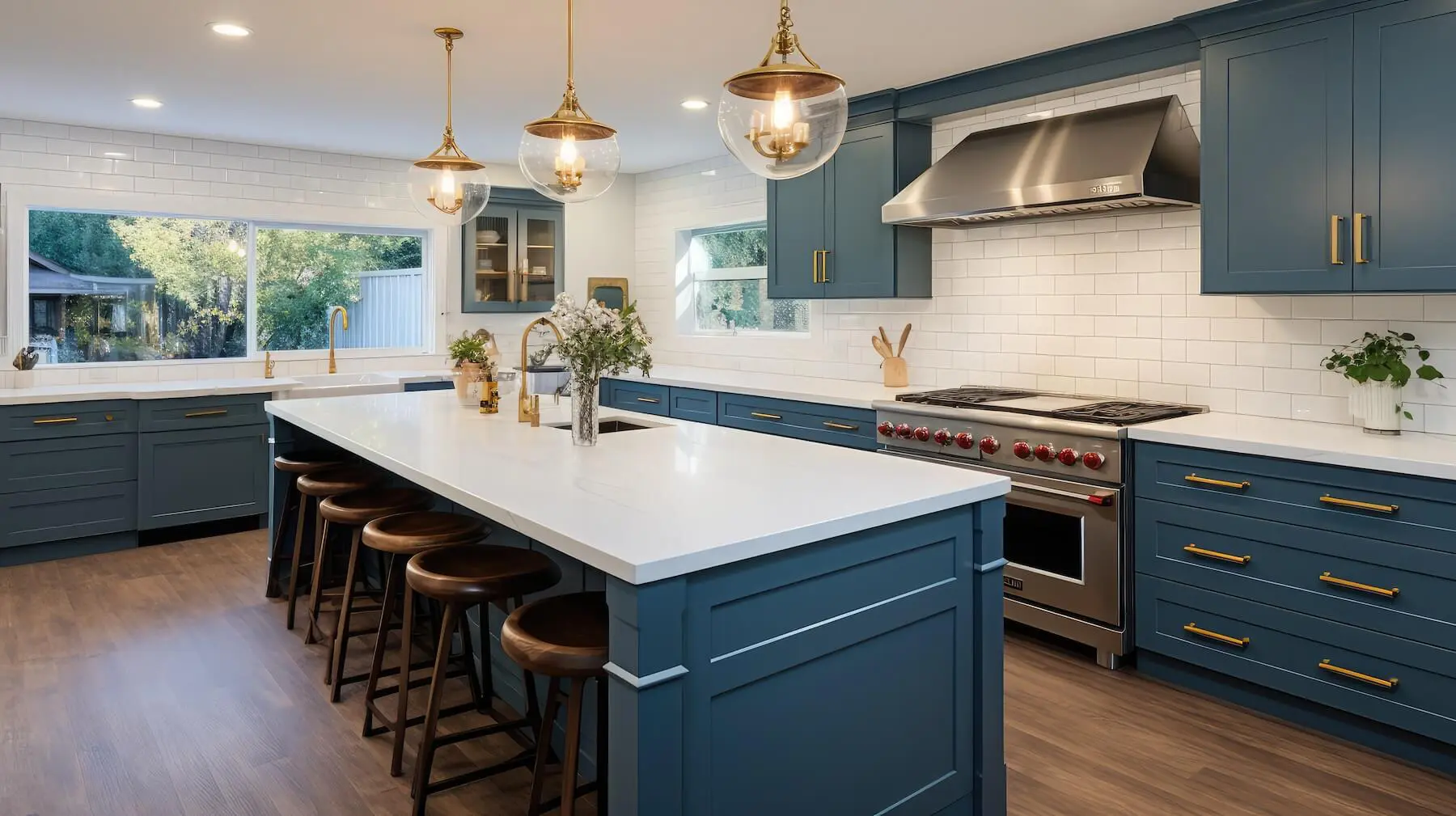
A kitchen renovation is one of the biggest line items in any home-improvement budget, and a huge chunk of that budget — sometimes more than half — goes to cabinets. So before you commit to tearing out the boxes and starting over, it’s worth asking a basic question: do your cabinets actually need to be replaced, or do they just need to look new?
For a lot of homeowners around the Lake Sunapee region and the Upper Valley, the answer is the second one. A professionally painted cabinet refresh delivers a kitchen that looks brand new for a fraction of the cost of replacement — when the underlying cabinet boxes are still in good shape. The trick is knowing how to tell the difference.
Here’s an honest comparison of the two options, what each one really costs, what you should expect from the finished result, and how to decide which one fits your kitchen.
The Real Cost Difference
Let’s start with the part most homeowners want to know first: how much you’ll actually save by painting instead of replacing.
Cabinet replacement runs across a wide range depending on the size of your kitchen, the quality of the new cabinets, and what’s being kept or changed in the layout. For a typical mid-size kitchen with around 25 to 30 doors and drawer fronts, you’re generally looking at a project that costs many tens of thousands of dollars by the time you’re done with new boxes, installation, hardware, countertop adjustments, plumbing or electrical relocation if anything shifts, and disposal of the old cabinets. High-end custom cabinets push the total significantly higher.
Cabinet painting for that same kitchen costs a fraction of replacement — often somewhere between 15% and 30% of the replacement number, depending on the condition, the number of doors, and the finish you choose. You’re paying for prep, the right product, careful spray application, and the labor to do it right. Not for new wood.
The exact numbers depend on your kitchen, which is why we always quote in writing after an in-person walkthrough. But the math is consistent: if your existing cabinet boxes are solid, painting saves you money the size of a used car at minimum.
What “Done Right” Actually Means for Painted Cabinets
This is where the conversation gets honest. Painted cabinets get a mixed reputation because plenty of them are painted badly. A weekend brush job by a homeowner — or by a contractor who doesn’t know cabinet work — produces visible brush strokes, drips, peeling at the hinges, sticky doors, and a finish that fails inside of a year.
That’s not what professional cabinet painting looks like. Done right, here’s what the process actually involves:
- Doors and drawer fronts come off the boxes and are labeled so they go back exactly where they came from.
- Hardware comes off — hinges, pulls, knobs. The new finish needs full access.
- Surfaces get cleaned thoroughly. Years of cooking grease, hand oils, and surface grime have to come off before primer goes on. This step is non-negotiable.
- Surfaces get sanded for adhesion. Even a great primer needs a slightly roughed surface to grip.
- Cabinet-appropriate primer goes down. Different cabinet substrates (solid wood, MDF, laminate, melamine) need different primers. Using the wrong one is one of the most common reasons painted cabinets fail.
- The finish coats are sprayed, not brushed. Sprayed application is what produces the smooth, level, factory-grade finish you actually want. Brushing leaves marks no matter how skilled the painter.
- The finish needs time to cure before the doors go back on. Skipping this step is the reason some painted cabinets feel sticky for months.
- Hardware reinstalls cleanly because the prep was done right.
When all of that happens, painted cabinets perform well for years and look indistinguishable from new ones in normal use. They’re not just an aesthetic refresh — they’re a real upgrade.
When Painting Is the Right Call
Painting is almost always the better option if:
- The cabinet boxes are structurally solid. Open the doors and look inside. Solid wood, plywood, or quality MDF boxes that aren’t sagging, warped, or water-damaged are perfect candidates.
- The layout works for you. Painting refreshes the cabinets you have, in the locations they’re in. If the layout itself is the problem, painting won’t solve that.
- You like the door style — or you’re willing to live with it. Painting keeps your existing doors and drawer fronts. If the door style is dated (raised-panel oak from the 90s, for example), paint will modernize it dramatically, but the door profile is still there underneath.
- The wood tone is what’s bothering you. Orange oak, yellowed maple, honey pine — paint completely solves these. A bright white or warm grey transforms the look entirely.
- You want a faster project. Cabinet painting typically takes one to two weeks. Replacement can take six to eight weeks once you factor in ordering, delivery, install, and any related work.
When Replacement Makes More Sense
Replace cabinets — don’t paint them — if:
- The boxes are damaged. Water damage, rot, severe warping, or sagging shelves usually mean it’s time. Paint won’t fix structural issues.
- The layout doesn’t work. If you’ve always wanted an island, a peninsula reconfigured, or different cabinet heights, paint can’t help. You’re really renovating, not refreshing.
- The cabinets are particle-board with peeling laminate that’s beyond repair. Some laminate cabinets can be painted with specialty prep, but heavily damaged ones aren’t worth the effort.
- You hate the door style. If looking at the door profile makes you unhappy regardless of color, replacement (or at minimum refacing — replacing just the doors and drawer fronts) is the better path.
- You’re doing a full kitchen renovation anyway. If countertops, flooring, appliances, and layout are all changing, you may want everything new for consistency.
The Refacing Middle Ground
There’s also a third option worth mentioning: refacing. Refacing replaces the doors and drawer fronts (and sometimes adds a veneer to the cabinet boxes) and then paints or stains the new fronts. It costs more than painting but considerably less than full replacement.
Refacing is the right call when the cabinet boxes are solid but the door style itself has to go — you want shaker doors but you’ve got raised-panel, or you want slab fronts but you’ve got fluted. We can do refacing combined with a sprayed paint finish, and it produces a result that looks completely custom.
What This Looks Like in Real Kitchens
The most dramatic before-and-after results we see are usually in kitchens with solid older cabinets that just look tired. A dark oak galley kitchen from the 1990s, painted a clean off-white with new brushed-nickel hardware, looks like a completely different room. Same for a 1980s honey-maple kitchen painted in a warm grey or a deep blue island with white perimeter cabinets — colors that feel current without dating themselves to a specific year.
Take a look at see recent cabinet work for before-and-after examples from kitchens around the region.
How to Decide
If you’re going back and forth on this, here’s a simple test. Open one of your cabinet doors. Knock on the inside of the box. Pull the drawer out and look at the slide hardware. Open and close a few doors and feel whether the hinges still operate cleanly.
If everything feels solid — knocking sounds like wood, the boxes don’t flex, the drawers slide reasonably well — your cabinets are good candidates for paint. If the boxes feel hollow and flimsy, the drawers grind, or the hinges are pulling out of stripped screw holes, you’re probably better off replacing.
Either way, an in-person walkthrough makes the decision clearer. We’re glad to come look at your kitchen, give you an honest opinion about which option fits your situation, and put together a written estimate for whatever you decide.
Request a free estimate or call us, and we’ll set up a time to see the kitchen.